Are You Limiting Capacity With an Undersized Powder Curing Oven
- 1 Understanding How Oven Size Restricts Your Throughput
- 1.1 Why Small Ovens Force Frequent, Time-heavy Batches
- 1.2 Signs Your Curing Oven Is Holding Back Production
- 1.3 How Overloading Affects Coating Quality and Cure Consistency
- 1.4 The Role Oven Capacity Plays in Peak Manufacturing Days
- 1.5 What Happens When Demand Exceeds Oven Space Limits
- 1.6 Why Larger Ovens Cut Downtime Between Runs
- 1.7 How Proper Oven Selection Supports Growing Orders
- 1.8 The Impact a Bigger Curing Space Has on Overall Output
Capacity problems rarely announce themselves loudly on a shop floor. Output may feel busy, schedules stay full, yet orders seem harder to push through on time. An undersized powder curing oven often sits at the center of that bottleneck, quietly limiting how much work a coating line can truly handle.
Understanding How Oven Size Restricts Your Throughput
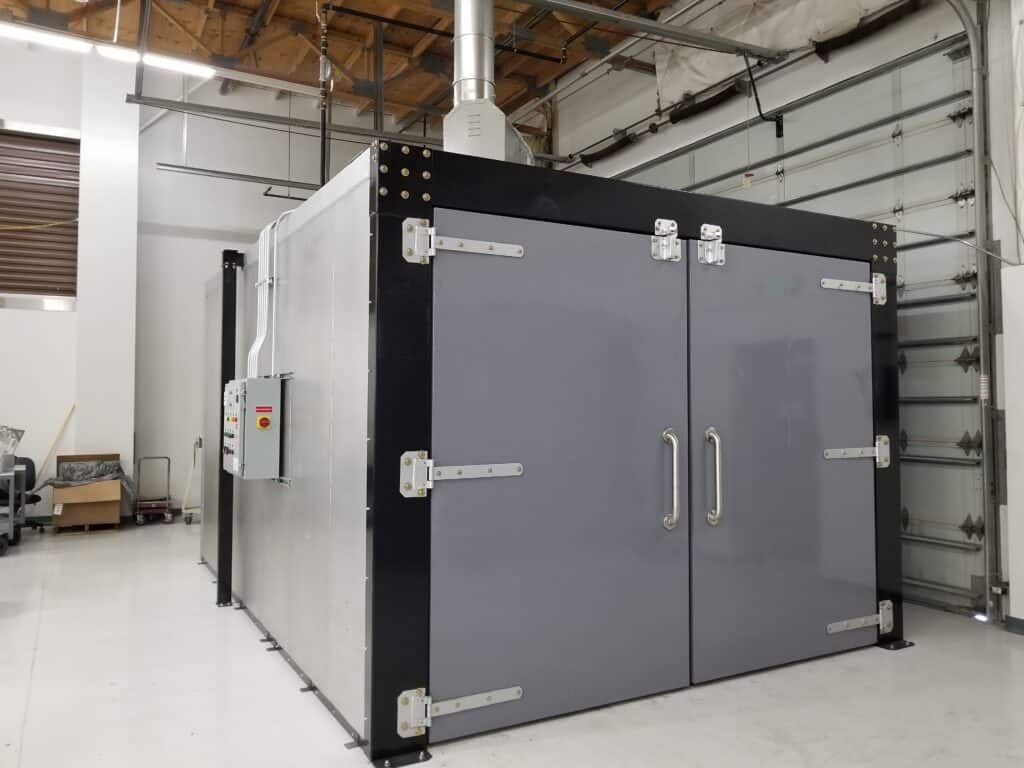
Oven size directly controls how many parts can be cured in a single cycle. Even efficient spray booths and skilled operators cannot overcome a curing chamber that simply lacks physical space. Each load becomes a hard ceiling on daily output, regardless of how fast the rest of the line moves.
Throughput losses compound over time. Smaller ovens force more cycles per shift, increasing heat-up and cool-down transitions. For facilities investing in powder coating equipment, oven capacity often determines whether production flows smoothly or constantly stalls waiting for the next cure window.
Why Small Ovens Force Frequent, Time-heavy Batches
Smaller curing chambers require parts to be divided into multiple batches. Every batch adds handling time, staging delays, and operator movement that do not directly add value. These repeated steps stretch schedules and increase labor strain.
Frequent batching also interrupts line rhythm. While one load cures, finished parts stack up waiting for space. Powder coating systems perform best with steady flow, not stop-and-go cycles dictated by limited oven volume.
Signs Your Curing Oven Is Holding Back Production
Missed ship dates often trace back to curing limitations rather than coating speed. If coated parts regularly queue near the oven, capacity is likely the issue. Operators may compensate by working overtime or rearranging loads, masking the real constraint.
Another sign appears during scheduling. Jobs get split across multiple shifts or days because they cannot fit efficiently into the oven. Even shops with modern powder coating equipment packages encounter this problem when oven sizing was underestimated early on.
How Overloading Affects Coating Quality and Cure Consistency
Attempting to maximize every load by crowding parts creates new problems. Airflow becomes restricted, heat distribution uneven, and cure times inconsistent. Some parts may reach full cure while others fall short, leading to rework or finish failures.
Quality issues tied to overloading often show up later, after parts leave the line. Finish defects, adhesion problems, or color variation can all stem from uneven curing. An industrial powder coating oven performs best when space allows uniform heat circulation.
The Role Oven Capacity Plays in Peak Manufacturing Days
Peak demand days expose capacity limits quickly. High-volume orders compress schedules, leaving little room for inefficiency. A small oven that works fine on average days can struggle when production spikes.
During peak periods, curing becomes the slowest step. Even with sufficient powder coating ovens elsewhere on the line, a single undersized unit forces prioritization decisions that delay less urgent jobs. Capacity planning should account for these peak scenarios, not just average loads.
What Happens When Demand Exceeds Oven Space Limits
When demand consistently exceeds oven space, workarounds emerge. Parts may be rushed, staged longer, or cured out of sequence. These adjustments add complexity and increase the chance of errors.
Over time, these habits become standard practice. The line adapts to the limitation instead of fixing it. Facilities searching for powder coating equipment for sale often discover that upgrading oven size unlocks output without changing any other process.
Why Larger Ovens Cut Downtime Between Runs
Larger ovens reduce the number of cycles required each shift. Fewer cycles mean fewer door openings, fewer load changes, and less idle time between runs. Heat stability improves as the oven stays at operating temperature longer.
Downtime reduction also lowers wear on components. Fans, burners, and controls operate more steadily instead of constantly restarting. For shops considering a powder coating oven for sale, cycle efficiency often delivers faster returns than speed alone.
How Proper Oven Selection Supports Growing Orders
Growth strains undersized equipment first. As order sizes increase, what once fit comfortably no longer does. Without adequate oven space, growth forces longer lead times or additional shifts rather than true capacity expansion.
Selecting the right oven size early supports scaling without disruption. Powder coating equipment packages designed with future volume in mind prevent repeated upgrades. Proper selection aligns curing capacity with both current and anticipated demand.
The Impact a Bigger Curing Space Has on Overall Output
Expanded curing space allows more parts per load, smoother flow, and fewer interruptions. Operators spend less time managing bottlenecks and more time maintaining quality. Output increases without adding labor or extending hours.
Bigger ovens also improve scheduling flexibility. Mixed loads, varied part sizes, and priority jobs fit more easily. For facilities relying on industrial powder coating oven performance, space often matters more than cycle speed alone.
Reliant Finishing Systems helps manufacturers evaluate curing capacity and select oven solutions that match real production demands. Their team designs powder coating systems with balanced throughput, quality, and room for growth. Right-sized curing equipment supports higher output without unnecessary complexity.